TOGETHER FOR LIFELONG CARE · CHAMPIONING RIGHTS FOR RARE AND COMPLEX EPILEPSIES
The Rare and COMPLEX Epilepsies Continuity of Care Rights Charter
Rare and complex epilepsies are a group of severe, often progressive neurological and multisystem disorders that go beyond seizures, encompassing a range of cognitive, motor, developmental, psychological and social comorbidities. Although the severity and combination of these challenges vary between individuals, these conditions profoundly impact patients and their families—including siblings—and require coordinated, multidisciplinary, lifelong care.
The Rare and COMPLEX Epilepsies Continuity of Care Rights Charter is a not-for-profit collaboration between Jazz Pharmaceuticals, UCB Pharma, Epilepsy Plus Alliance – E+A, and the International Bureau for Epilepsy (IBE) which has been initiated and equally funded by Jazz Pharmaceuticals and UCB Pharma.
People living with Rare and COMPLEX Epilepsies have the Right to:
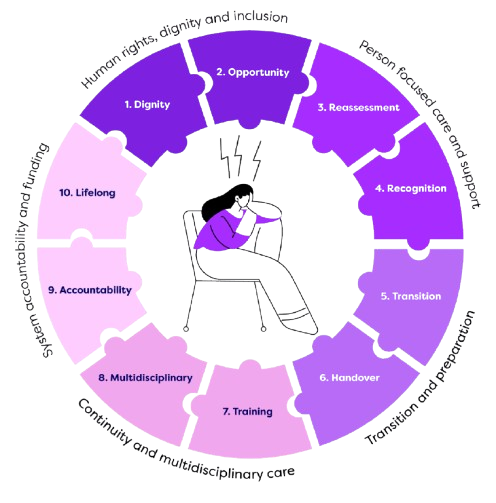
1. DIGNITY, respect and appropriate legal representation.
Adults living with rare and complex epilepsies should be recognised as individuals with their own preferences, goals, relationships, aspirations and rights, regardless of disability, communication difficulties or level of dependence. They should be supported to participate, to the fullest extent possible for the individual, in decisions about their care, lives, and day-to-day living. Where needed, they should have access to appropriate supported decision-making or legal representation. This should ensure people are recognised as adults, without undermining their entitlement to appropriate support and treatment throughout their lives.
2. The OPPORTUNITY to live their best possible lives, including participation in adult relationships, education, employment, physical activity and community life.
People should be supported to participate, to the fullest extent possible for the individual, with protection from stigma, exclusion and avoidable loss of opportunity throughout adulthood.
3. Regular REASSESSMENT and updated personalised care plans, including emergency plans.
People’s needs may evolve throughout life, requiring regular reassessment and, where appropriate, diagnostic review. Care plans, including continuity passports or clear clinical summaries, together with emergency plans, should be reviewed regularly and reflect the person’s evolving medical, cognitive, behavioural, psychiatric, emotional and social needs.
4. RECOGNITION and support for parents, siblings and other caregivers as essential care partners.
Parents, siblings and other caregivers with ongoing caregiving and, where appropriate, supported decision-making respon-sibilities should have a pathway to formal recognition and support in their long-term roles, including access to psychosocial support, respite, accessible understandable information and guidance, and involvement in care planning and decision-making.
5. A safe and coordinated TRANSITION into adult services.
Preparation should begin 4–6 years before the anticipated transfer to adult services, supported by clear guidelines, established processes and mandated implementation. Important steps in care and support should be planned progressively so that people and their caregivers do not feel they are falling off a cliff-edge during transition to adult services.
6. Structured HANDOVERS and identified care pathway coordinators.
Paediatric and adult teams should share responsibility during the transition period through a structured handover, including timely sharing of medical records and at least one joint consultation. This should be supported by a named care pathway coordinator or team responsible for helping patients and caregivers navigate care pathways, while ensuring continuity of care throughout different stages of life. Continuity of care should not depend on families bridging gaps.
7. Access to paediatric and adult healthcare professionals TRAINED in rare and complex epilepsies, associated conditions, comorbidities and treatments.
Training for paediatric and adult healthcare professionals should include rare and complex epilepsies, associated conditions and comorbidities, including cognitive, behavioural, psychiatric and neurodevelopmental aspects. Training should also include an understanding of treatments initiated during childhood and how they may continue and evolve throughout adulthood.
8. MULTIDISCIPLINARY care from childhood throughout adulthood, including support for comorbidities, psychological, psychiatric, rehabilitation and social care.
Care should address the full impact of the condition across health and daily life, including access to multidisciplinary support throughout life, such as psychology, psychiatry, dietetics, rehabilitation and social care, adapted to the individual’s needs and life stage, so that the quality of support does not decline atthe paediatric-adult care transition.
9. Lifelong follow-up, monitoring and healthcare provider ACCOUNTABILITY.
Ongoing follow-up and review should identify breakdowns in care, treatment disruption and emerging risks, with clear accountabilityacross the health and social care system to address failures in care. No person or caregiver should be left unsupported when care breaks down.
10. Healthcare systems that formally recognise resource and support LIFELONG continuity of care.
People should have timely access throughout life, as their needs evolve, to specialist expertise, appropriate evidence-based, approved therapies and multidisciplinary care. Continuity of care should be strengthened through regional, national and cross-border collaboration, including through initiatives such as the EpiCARE European Reference Network.
To make these Rights a reality, we call on policymakers and payers across Europe to:
- Establish a legal and practical framework that enables lifelong continuity of care and supports people living with rare and complex epilepsies to live their best possible lives, including participation in adult relationships, education, employment, physical activity and community life.
- Include continuity of care and transition within national strategies, guidelines and budgets with dedicated budgets for implementation.
- Involve patient representatives in the design, implementation and evaluation of national strategies, guidelines and related frameworks.
- Implement an early, flexible and regularly reviewed transition process, including structured paediatric-adult handovers, and shared responsibility across teams during transition.
- Provide mandatory training and continuing professional development for all health and care professionals involved in the care of people with rare and complex epilepsies, associated conditions and comorbidities.
- Provide budget and workforce for multidisciplinary and coordinated transition including psychiatric, psychosocial, rehabilitation and social care support, as well as support for adult education, employment, social and physical activity.
- Provide formal and financial recognition of the essential role patient organisations play in supporting people and families across the lifespan.
- Provide specific budget and support for people with ongoing caregiving responsibilities, including appropriate respite and psychosocial support.
- Monitor transition and long-term care outcomes nationally, including patient-reported outcomes across the lifespan. Publish regular national reports informed by patients, caregivers and coordinators and hold public agencies accountable for addressing failures in care by health and social care providers.
The Rare and COMPLEX Epilepsies Continuity of Care Rights Charter is a not-for-profit collaboration between Jazz Pharmaceuticals, UCB Pharma, Epilepsy Plus Alliance (E+A) and the International Bureau for Epilepsy (IBE), which has been initiated and equally funded by Jazz Pharmaceuticals and UCB Pharma.
Contact us
For enquiries, support, or collaboration opportunities, please do not hesitate to get in touch. Our team is committed to providing timely and helpful responses to all your questions and requests.
info@epilepsyplus.org
Subscribe to our newsletter
Get the latest updates to your inbox.